---
key: mechanic/voice-audio--family-17
type: mechanic
id: voice-audio--family-17
lang: en
title: Auditory memory and sequence transformation
summary: >-
The player remembers heard material and reproduces or transforms its sequence
according to a rule.
updatedAt: '2026-10-22'
status: active
url: 'https://gamemechanics.pro/en/knowledge/mechanic/voice-audio--family-17/'
jsonUrl: >-
https://gamemechanics.pro/api/v1/knowledge/en/mechanic/voice-audio--family-17.json
markdownUrl: >-
https://gamemechanics.pro/content/knowledge/en/mechanic/voice-audio--family-17.md
aliases:
- Auditory memory
tags:
- Voice and sound
- Hearing as perception
sourceIds:
- source-872a30e434db6d16
sources:
- id: source-872a30e434db6d16
title: Duolingo
url: >-
https://blog.duolingo.com/duolingo-101-how-to-learn-a-language-on-duolingo/
verifiedAt: null
relations: []
placements:
- catalogId: voice-audio
id: family-17
title: Voice and sound
url: 'https://gamemechanics.pro/en/mechanics/voice-audio/#family-17'
categoryIds:
- hearing
supersededBy: []
attributes:
preview:
updatedAt: '2026-10-22'
title: Auditory memory
description: >-
The player remembers heard material and reproduces or transforms its
sequence according to a rule.
image:
src: images/mechanics/learning-duo-101-5.webp
width: 665
height: 1440
game: Duolingo
sourceUrl: >-
https://blog.duolingo.com/duolingo-101-how-to-learn-a-language-on-duolingo/
originalUrl: >-
https://s3.us-east-1.amazonaws.com/content.duolingo.com/Duolingo+101%3A+How+to+learn+a+language+on+Duolingo/7-exerciseTypes.png
credit: Duolingo
rights: © Duolingo. All rights reserved. Excluded from MIT and CC BY 4.0.
caption: 'Duolingo: building a heard French sentence from word tiles'
alt: 'Duolingo: building a heard French sentence from word tiles'
markers:
- x: 50
'y': 62
label: Word bank for constructing the sentence
tips:
- Distinguish recognition of individual sounds from sequence retention.
examples:
- title: Duolingo
url: >-
https://blog.duolingo.com/duolingo-101-how-to-learn-a-language-on-duolingo/
endsAt: null
provenance: >-
Original taxonomy adapted from user-selected design discussions; linked
sources support specific examples, not the whole classification.
license: CC-BY-4.0
codeLicense: MIT
attribution: gamemechanics.pro contributors
catalogKey: catalog/voice-audio
---
# Auditory memory and sequence transformation
id: voice-audio--family-17
type: mechanic
key: mechanic/voice-audio--family-17
lang: en
status: active
url: https://gamemechanics.pro/en/knowledge/mechanic/voice-audio--family-17/
The player remembers heard material and reproduces or transforms its sequence according to a rule.
## At a glance
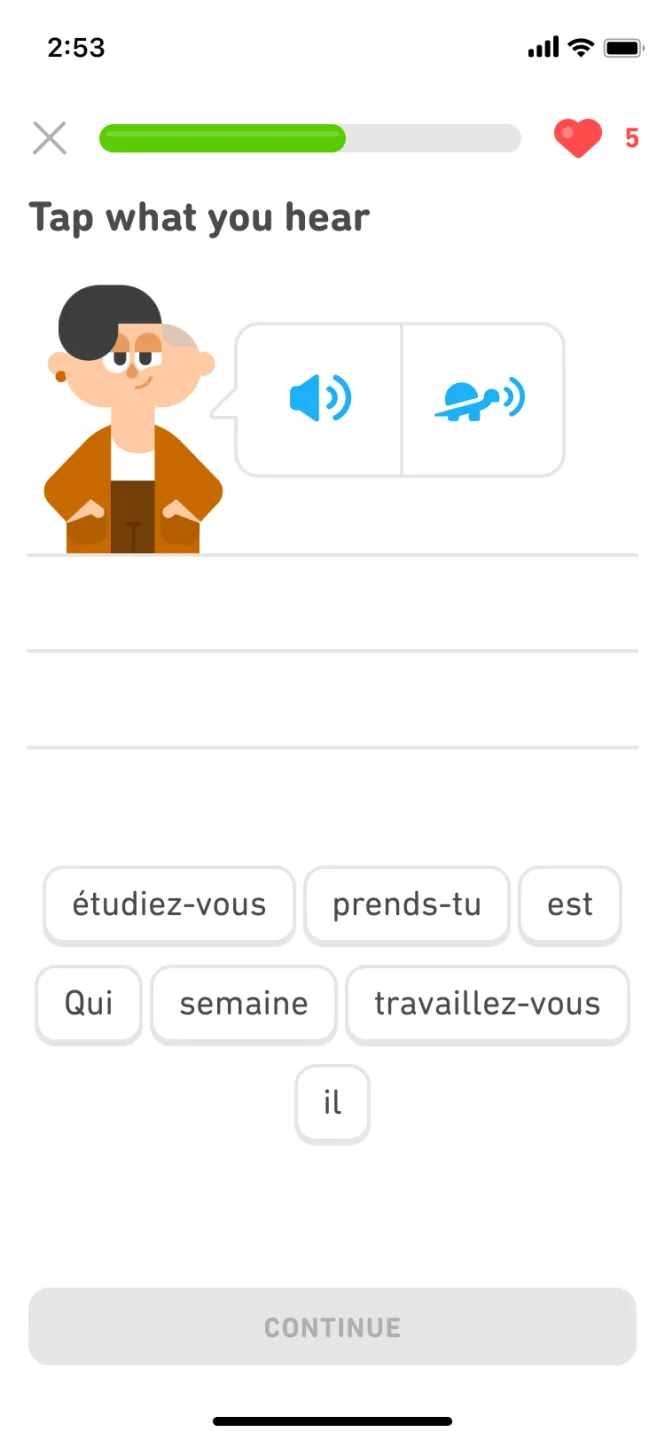
[Duolingo](https://blog.duolingo.com/duolingo-101-how-to-learn-a-language-on-duolingo/) · © Duolingo. All rights reserved. Excluded from MIT and CC BY 4.0.
1. Word bank for constructing the sentence
- Distinguish recognition of individual sounds from sequence retention.
- [Duolingo](https://blog.duolingo.com/duolingo-101-how-to-learn-a-language-on-duolingo/)
## How it works
Remember material and reproduce or transform it under a rule.
## Variants
### Memory
- Repeat tones, words, noises or directions.
- Reproduce a growing sequence.
- Remember sound pairs and find matches.
- Retain instructions until they can be used.
### Transformation
- Repeat a sequence in reverse.
- Sort heard elements by a property.
- Reproduce only elements of a selected category.
- Shift rhythm, transpose pitch or replace elements under a rule.
### Changes and omissions
- Find a missing sound or word.
- Identify an element changed between listens.
- Continue a sequence using an inferred rule.
- Restore a sequence from fragments heard at different times.
## Context and limits
A working design-space map: 27 families, 81 branches and 324 variants. Voice control, audio-based play and communication can combine or exist separately. Released-game examples support particular techniques; supplementary combinations are design proposals.
## Connected materials
## Sources and provenance
Original taxonomy adapted from user-selected design discussions; linked sources support specific examples, not the whole classification.
- [Duolingo](https://blog.duolingo.com/duolingo-101-how-to-learn-a-language-on-duolingo/) (id: source-872a30e434db6d16)
CC-BY-4.0 · gamemechanics.pro contributors