---
key: mechanic/time-world-rules--t250
type: mechanic
id: time-world-rules--t250
lang: en
title: 'Stopping, slowing and accelerating time'
summary: >-
Changing time speed creates analysis and execution opportunities, but requires
explicit exceptions across world systems.
updatedAt: '2026-10-22'
status: active
url: 'https://gamemechanics.pro/en/knowledge/mechanic/time-world-rules--t250/'
jsonUrl: >-
https://gamemechanics.pro/api/v1/knowledge/en/mechanic/time-world-rules--t250.json
markdownUrl: >-
https://gamemechanics.pro/content/knowledge/en/mechanic/time-world-rules--t250.md
aliases:
- Changing time speed
tags:
- 'Time, information and world rules'
- Mechanics and variants
sourceIds:
- source-eceba0e40b661634
- source-6d8132b002132185
sources:
- id: source-eceba0e40b661634
title: 'PuzzleScript: Rules'
url: 'https://www.puzzlescript.net/Documentation/rules.html'
verifiedAt: null
- id: source-6d8132b002132185
title: F.E.A.R. (2005)
url: 'https://gamemechanics.org/patterns/bullet-time'
verifiedAt: null
relations: []
placements:
- catalogId: time-world-rules
id: t250
title: 'Time, information and world rules'
url: 'https://gamemechanics.pro/en/mechanics/time-world-rules/#t250'
categoryIds:
- mechanics
supersededBy: []
attributes:
preview:
updatedAt: '2026-10-22'
title: Changing time speed
description: >-
Changing time speed creates analysis and execution opportunities, but
requires explicit exceptions across world systems.
image:
src: images/mechanics/combat-bullet-time.webp
width: 498
height: 276
game: F.E.A.R. (2005)
sourceUrl: 'https://gamemechanics.org/patterns/bullet-time'
originalUrl: 'https://cdn.gamemechanics.org/webm/fear_bullet_time.webm'
sourceFrameSeconds: 4.91
credit: Monolith Productions; frame from clip via GameMechanics.org
rights: >-
Game imagery © its respective rights holders. Source host:
GameMechanics.org. All rights reserved; excluded from the portal’s MIT
and CC BY 4.0 licenses.
caption: Reflex Time during a firefight
alt: >-
A F.E.A.R. firefight during Reflex Time has characteristic edge blur and
visible shot effects.
markers:
- x: 52
'y': 56
label: Enemy at the center of the slowed scene
- x: 15
'y': 42
label: Visual effect of the active mode
tips:
- Define which objects follow the altered time speed.
examples:
- title: F.E.A.R. (2005)
url: 'https://gamemechanics.org/patterns/bullet-time'
endsAt: null
provenance: >-
Original bilingual editorial overviews authored for gamemechanics.pro on
2026-10-20 and reviewed on 2026-10-21. Scenarios are hypothetical design
examples; prototype checks describe work to perform, not completed playtests.
Primary sources support the stated techniques and implementation context, not
every proposed variant.
license: CC-BY-4.0
codeLicense: MIT
attribution: gamemechanics.pro contributors
catalogKey: catalog/time-world-rules
---
# Stopping, slowing and accelerating time
id: time-world-rules--t250
type: mechanic
key: mechanic/time-world-rules--t250
lang: en
status: active
url: https://gamemechanics.pro/en/knowledge/mechanic/time-world-rules--t250/
Changing time speed creates analysis and execution opportunities, but requires explicit exceptions across world systems.
## At a glance
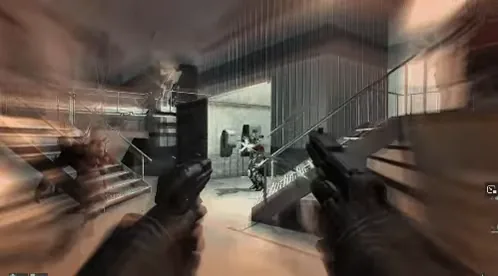
[F.E.A.R. (2005)](https://gamemechanics.org/patterns/bullet-time) · Game imagery © its respective rights holders. Source host: GameMechanics.org. All rights reserved; excluded from the portal’s MIT and CC BY 4.0 licenses.
[Source recording](https://cdn.gamemechanics.org/webm/fear_bullet_time.webm), 4.91 s
1. Enemy at the center of the slowed scene
2. Visual effect of the active mode
- Define which objects follow the altered time speed.
- [F.E.A.R. (2005)](https://gamemechanics.org/patterns/bullet-time)
## How it works
Changing time speed creates analysis and execution opportunities, but requires explicit exceptions across world systems.
## Variants
### Mechanic variants
- Stopping freezes the world but permits commands.
- Slow motion expands a player's response window.
- Fast-forward skips predictable repeated cycles.
- Local fields alter the rate of selected objects.
## Design example
A projectile slows inside a sphere so a reflector can move before it exits.
Prototype check: Test timers, audio and physics across rate boundaries, including pausing within another slow-motion effect.
## Context and limits
Time and space rules change action causality; the interface must show which state survives a transformation. Each overview separates player actions, state changes and alternative rules. Examples are hypothetical design scenarios, not claims about a named game. A prototype check states an observable question for the next iteration. Existing detailed references remain separately linked from the direction map.
## Connected materials
## Sources and provenance
Original bilingual editorial overviews authored for gamemechanics.pro on 2026-10-20 and reviewed on 2026-10-21. Scenarios are hypothetical design examples; prototype checks describe work to perform, not completed playtests. Primary sources support the stated techniques and implementation context, not every proposed variant.
- [PuzzleScript: Rules](https://www.puzzlescript.net/Documentation/rules.html) (id: source-eceba0e40b661634)
- [F.E.A.R. (2005)](https://gamemechanics.org/patterns/bullet-time) (id: source-6d8132b002132185)
CC-BY-4.0 · gamemechanics.pro contributors