---
key: mechanic/social-cooperation--t202
type: mechanic
id: social-cooperation--t202
lang: en
title: Social deduction and hidden roles
summary: >-
Hidden roles give participants different knowledge and goals, while discussion
compares statements with observed actions.
updatedAt: '2026-10-22'
status: active
url: 'https://gamemechanics.pro/en/knowledge/mechanic/social-cooperation--t202/'
jsonUrl: >-
https://gamemechanics.pro/api/v1/knowledge/en/mechanic/social-cooperation--t202.json
markdownUrl: >-
https://gamemechanics.pro/content/knowledge/en/mechanic/social-cooperation--t202.md
aliases: []
tags:
- Social relationships and shared play
- Mechanics and variants
sourceIds:
- source-3817d420df0baa92
- source-92ca9b88b95a0bee
sources:
- id: source-3817d420df0baa92
title: 'Robert Nystrom: State'
url: >-
https://github.com/munificent/game-programming-patterns/blob/master/book/state.markdown
verifiedAt: null
- id: source-92ca9b88b95a0bee
title: Among Us
url: 'https://store.steampowered.com/app/945360/'
verifiedAt: null
relations:
- type: uses
direction: outgoing
label: Sources in the selection
key: resource/state-pattern
title: 'State: Game Programming Patterns'
url: 'https://gamemechanics.pro/en/resources/#resource-state-pattern'
jsonUrl: 'https://gamemechanics.pro/api/v1/knowledge/en/resource/state-pattern.json'
markdownUrl: 'https://gamemechanics.pro/content/knowledge/en/resource/state-pattern.md'
placements:
- catalogId: social-cooperation
id: t202
title: Social relationships and shared play
url: 'https://gamemechanics.pro/en/mechanics/social-cooperation/#t202'
categoryIds:
- mechanics
supersededBy: []
attributes:
preview:
updatedAt: '2026-10-22'
title: Social deduction and hidden roles
description: >-
Hidden roles give participants different knowledge and goals, while
discussion compares statements with observed actions.
image:
src: images/mechanics/broad-among-us-05.webp
width: 1440
height: 810
game: Among Us
sourceUrl: 'https://store.steampowered.com/app/945360/'
originalUrl: >-
https://shared.akamai.steamstatic.com/store_item_assets/steam/apps/945360/ss_17be75e178e3520c986504504ada8535de19cc0d.1920x1080.jpg?t=1792187809
credit: Innersloth / Innersloth
rights: © Innersloth / Innersloth. All rights reserved.
caption: Discussion before voting in Among Us
alt: Discussion before voting in Among Us
markers:
- x: 54
'y': 47
label: Public messages let players compare participants’ claims
tips:
- 'Distinguish observed events, player claims and hidden roles.'
examples:
- title: Among Us
url: 'https://store.steampowered.com/app/945360/'
endsAt: null
provenance: >-
Original bilingual editorial overviews authored for gamemechanics.pro on
2026-10-20 and reviewed on 2026-10-21. Scenarios are hypothetical design
examples; prototype checks describe work to perform, not completed playtests.
Primary sources support the stated techniques and implementation context, not
every proposed variant.
license: CC-BY-4.0
codeLicense: MIT
attribution: gamemechanics.pro contributors
catalogKey: catalog/social-cooperation
---
# Social deduction and hidden roles
id: social-cooperation--t202
type: mechanic
key: mechanic/social-cooperation--t202
lang: en
status: active
url: https://gamemechanics.pro/en/knowledge/mechanic/social-cooperation--t202/
Hidden roles give participants different knowledge and goals, while discussion compares statements with observed actions.
## At a glance
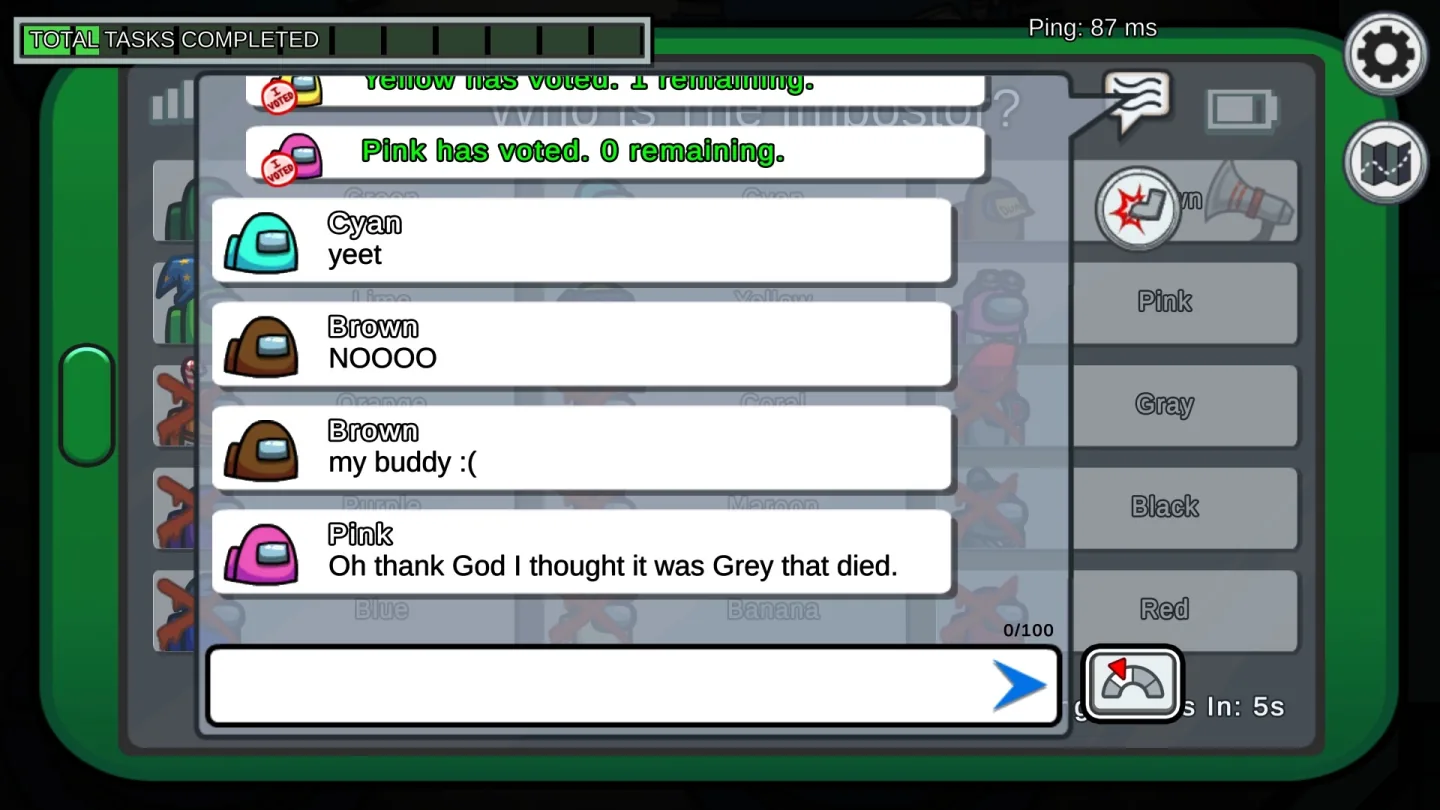
[Among Us](https://store.steampowered.com/app/945360/) · © Innersloth / Innersloth. All rights reserved.
1. Public messages let players compare participants’ claims
- Distinguish observed events, player claims and hidden roles.
- [Among Us](https://store.steampowered.com/app/945360/)
## How it works
Hidden roles give participants different knowledge and goals, while discussion compares statements with observed actions.
## Variants
### Mechanic variants
- Night phases conceal the source of an action.
- Public votes commit the group to a hypothesis.
- Private abilities provide testable information fragments.
- Bluffs explain part of the observed evidence.
## Design example
A participant claims to have guarded a door while a public log places them elsewhere.
Prototype check: Test evidential grounds beyond random accusations and useful participation after elimination.
## Context and limits
Social mechanics connect participants’ different capabilities through care, trust, coordination and conflicting commitments. Each overview separates player actions, state changes and alternative rules. Examples are hypothetical design scenarios, not claims about a named game. A prototype check states an observable question for the next iteration. Existing detailed references remain separately linked from the direction map.
## Connected materials
- Sources in the selection: [State: Game Programming Patterns](https://gamemechanics.pro/en/resources/#resource-state-pattern) (key: resource/state-pattern)
## Sources and provenance
Original bilingual editorial overviews authored for gamemechanics.pro on 2026-10-20 and reviewed on 2026-10-21. Scenarios are hypothetical design examples; prototype checks describe work to perform, not completed playtests. Primary sources support the stated techniques and implementation context, not every proposed variant.
- [Robert Nystrom: State](https://github.com/munificent/game-programming-patterns/blob/master/book/state.markdown) (id: source-3817d420df0baa92)
- [Among Us](https://store.steampowered.com/app/945360/) (id: source-92ca9b88b95a0bee)
CC-BY-4.0 · gamemechanics.pro contributors