---
key: mechanic/phone-haptics--family-timing
type: mechanic
id: phone-haptics--family-timing
lang: en
title: 'Timing, rhythm and reaction'
summary: >-
Pulse times and pauses define rhythm. Haptrix places individual haptic events
on a timeline to create a distinguishable sequence.
updatedAt: '2026-10-22'
status: active
url: 'https://gamemechanics.pro/en/knowledge/mechanic/phone-haptics--family-timing/'
jsonUrl: >-
https://gamemechanics.pro/api/v1/knowledge/en/mechanic/phone-haptics--family-timing.json
markdownUrl: >-
https://gamemechanics.pro/content/knowledge/en/mechanic/phone-haptics--family-timing.md
aliases: []
tags:
- Phone haptics
- Mechanics catalog
sourceIds:
- source-228f7312eafb9b26
sources:
- id: source-228f7312eafb9b26
title: Haptrix
url: 'https://www.haptrix.com/store'
verifiedAt: null
relations: []
placements:
- catalogId: phone-haptics
id: family-timing
title: Phone haptics
url: 'https://gamemechanics.pro/en/mechanics/phone-haptics/#family-timing'
categoryIds:
- section-1
supersededBy: []
attributes:
preview:
updatedAt: '2026-10-22'
title: 'Timing, rhythm and reaction'
description: >-
Pulse times and pauses define rhythm. Haptrix places individual haptic
events on a timeline to create a distinguishable sequence.
image:
src: images/mechanics/control-haptrix-transients.webp
width: 1440
height: 900
crop:
x: 47
'y': 71
width: 1343
height: 494
game: Haptrix
sourceUrl: 'https://www.haptrix.com/store'
originalUrl: 'https://www.haptrix.com/images/screenshots/transients.png'
credit: nthState / NTHSTATE LTD
rights: >-
© nthState / NTHSTATE LTD. Official Haptrix screenshot; all rights
reserved. Excluded from MIT and CC BY 4.0.
caption: 'Haptrix: individual pulses on a timeline'
alt: 'Haptrix: individual pulses on a timeline'
markers:
- x: 31
'y': 31
label: A bar’s position sets time and its height represents intensity
tips:
- 'Test rhythm recognition on the actual phone, not only through the graph.'
examples:
- title: Haptrix
url: 'https://www.haptrix.com/store'
endsAt: null
provenance: >-
Original editorial design catalog consolidated from project discussions on
2026-10-20. Complete discussion item lists and contextual limitations are
preserved; linked primary sources support specific techniques, not the entire
classification. English translation was prepared with machine assistance and
editorial review.
license: CC-BY-4.0
codeLicense: MIT
attribution: gamemechanics.pro contributors
catalogKey: catalog/phone-haptics
---
# Timing, rhythm and reaction
id: phone-haptics--family-timing
type: mechanic
key: mechanic/phone-haptics--family-timing
lang: en
status: active
url: https://gamemechanics.pro/en/knowledge/mechanic/phone-haptics--family-timing/
Pulse times and pauses define rhythm. Haptrix places individual haptic events on a timeline to create a distinguishable sequence.
## At a glance
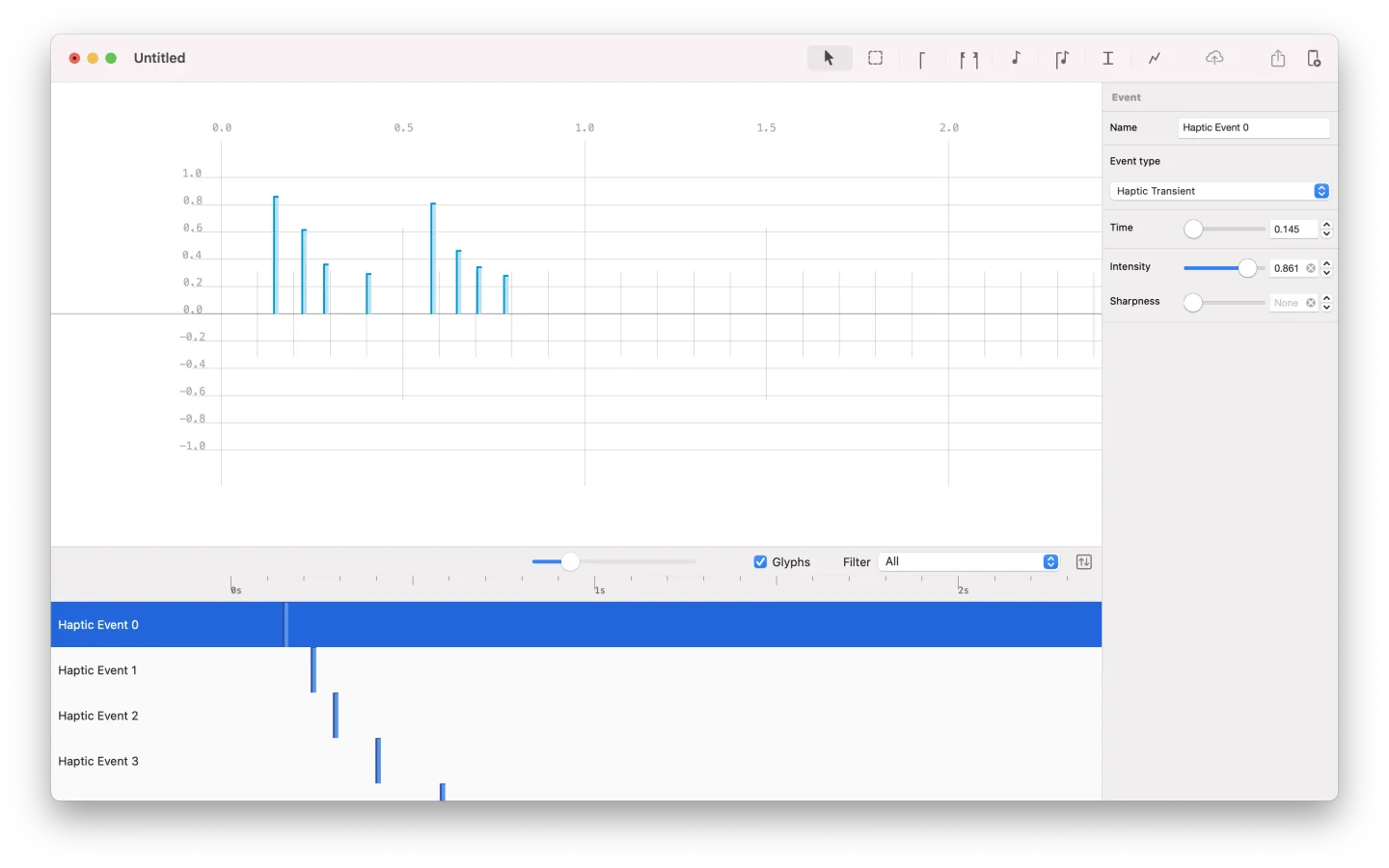
[Haptrix](https://www.haptrix.com/store) · © nthState / NTHSTATE LTD. Official Haptrix screenshot; all rights reserved. Excluded from MIT and CC BY 4.0.
1. A bar’s position sets time and its height represents intensity
- Test rhythm recognition on the actual phone, not only through the graph.
- [Haptrix](https://www.haptrix.com/store)
## How it works
The player acts in relation to the moment, duration or structure of the tactile signal.
## Variants
### Variants and applications
- Press on impulse. Role: Mechanics. Features: Basic impulses. Input: touch. Rule: After an unpredictable pause, a signal arrives; the player presses as quickly as possible. Application: Reaction duel, quick response, attention training. Limitations: The delay of the entire device chain is measured; The results of different models are not equal to laboratory measurements.
- Do not respond to a false signal. Role: Mechanics. Features: Basic impulses. Input: touch. Rule: One rhythm requires pressing, another requires inaction; an unnecessary reaction is considered an error. Application: Go/no-go, command recognition, duel with a decoy. Limitations: Patterns must be reliably distinguishable on target phones.
- Stop at the right moment. Role: Mechanics. Features: Basic impulses. Input: touch. Rule: A series of pulses shows the progress of a conventional scale; the player stops it in the target window. Application: Opening, forging, critical hit. Limitations: Give a sufficient time window taking into account the delay of the actuator and perception.
- Tactile metronome. Role: Mechanics. Features: Basic impulses. Input: touch, sensors. Rule: Regular signals set the beat; the player synchronizes clicks or movements. Application: Rhythm game, drums, dance input. Limitations: The rate of repetition of impulses is not equal to the physical frequency of motor oscillations.
- Keeping the pace in silence. Role: Mechanics. Features: Basic impulses. Input: touch. Rule: After a few clock cycles the signals disappear; the player continues the rhythm and receives a deviation score. Application: Musical memory, internal metronome. Limitations: Skip is the rule, so the beginning and end of the silent part must be clear.
- Hold duration. Role: Mechanics. Features: Basic impulses. Input: hold. Rule: Player senses a duration pattern, then plays it by holding a button. Applications: Interval comparison, valve control, puzzle. Limitations: On simple motors, short patterns may merge; choose convenient intervals.
- Rhythmic echo. Role: Mechanics. Features: Basic impulses. Input: touch. Rule: The phone plays a sequence of short and long beeps; the player repeats it by pressing. Application: Simon, musical memory, opening the door. Limitations: Limit the length and give a repeat of the pattern upon request.
- Countdown to the event. Role: Feedback. Features: Basic impulses. Input: timer. Rule: The series becomes more frequent before the start; the final distinguishable impulse indicates zero. Application: Race, turn timer, preparation for a dash. Limitations: Do not mix the preparatory rhythm with the start signal itself.
- Early action on a precursor. Role: Mechanics. Features: Basic impulses. Input: touch. Rule: The preparatory pattern predicts the strike; the player performs defense until the final impulse. Application: Parry, evasion, sports start. Limitations: The start of the signal must precede a dangerous event in a fair playing window.
- Phase shift. Role: Mechanics. Features: Basic impulses. Input: touch. Rule: The player adjusts his own rhythm so as to fall between pulses or on a given beat. Application: Polyrhythm, bypassing lasers, synchronizing mechanisms. Limitations: Start with simple ratios; Dense sequences are difficult to read.
## Context and limits
Author's systematization: 160 cards in 16 groups. These are mechanics, feedback techniques, applications and experimental extensions, not 160 independent physical effects. Design examples are hypothetical, not statements about the released games that used them.
## Connected materials
## Sources and provenance
Original editorial design catalog consolidated from project discussions on 2026-10-20. Complete discussion item lists and contextual limitations are preserved; linked primary sources support specific techniques, not the entire classification. English translation was prepared with machine assistance and editorial review.
- [Haptrix](https://www.haptrix.com/store) (id: source-228f7312eafb9b26)
CC-BY-4.0 · gamemechanics.pro contributors