---
key: mechanic/phone-haptics--family-story
type: mechanic
id: phone-haptics--family-story
lang: en
title: 'Narrative, emotion and presence'
summary: >-
Design scenario: a recognisable tactile motif accompanies a scene. Haptrix
lets a designer set the duration and build-up of that signal.
updatedAt: '2026-10-22'
status: active
url: 'https://gamemechanics.pro/en/knowledge/mechanic/phone-haptics--family-story/'
jsonUrl: >-
https://gamemechanics.pro/api/v1/knowledge/en/mechanic/phone-haptics--family-story.json
markdownUrl: >-
https://gamemechanics.pro/content/knowledge/en/mechanic/phone-haptics--family-story.md
aliases:
- Narrative and presence
tags:
- Phone haptics
- Mechanics catalog
sourceIds:
- source-228f7312eafb9b26
sources:
- id: source-228f7312eafb9b26
title: Haptrix
url: 'https://www.haptrix.com/store'
verifiedAt: null
relations: []
placements:
- catalogId: phone-haptics
id: family-story
title: Phone haptics
url: 'https://gamemechanics.pro/en/mechanics/phone-haptics/#family-story'
categoryIds:
- section-1
supersededBy: []
attributes:
preview:
updatedAt: '2026-10-22'
title: Narrative and presence
description: >-
Design scenario: a recognisable tactile motif accompanies a scene. Haptrix
lets a designer set the duration and build-up of that signal.
image:
src: images/mechanics/control-haptrix-adsr.webp
width: 1440
height: 900
crop:
x: 47
'y': 71
width: 1343
height: 494
game: Haptrix
sourceUrl: 'https://www.haptrix.com/store'
originalUrl: 'https://www.haptrix.com/images/screenshots/adsr.png'
credit: nthState / NTHSTATE LTD
rights: >-
© nthState / NTHSTATE LTD. Official Haptrix screenshot; all rights
reserved. Excluded from MIT and CC BY 4.0.
caption: 'Haptrix: duration and envelope of a designed tactile motif'
alt: 'Haptrix: duration and envelope of a designed tactile motif'
markers:
- x: 30
'y': 32
label: 'Attack, sustain and release shape the signal'
tips:
- Use the motif consistently and allow its strength to be reduced.
examples:
- title: Haptrix
url: 'https://www.haptrix.com/store'
endsAt: null
provenance: >-
Original editorial design catalog consolidated from project discussions on
2026-10-20. Complete discussion item lists and contextual limitations are
preserved; linked primary sources support specific techniques, not the entire
classification. English translation was prepared with machine assistance and
editorial review.
license: CC-BY-4.0
codeLicense: MIT
attribution: gamemechanics.pro contributors
catalogKey: catalog/phone-haptics
---
# Narrative, emotion and presence
id: phone-haptics--family-story
type: mechanic
key: mechanic/phone-haptics--family-story
lang: en
status: active
url: https://gamemechanics.pro/en/knowledge/mechanic/phone-haptics--family-story/
Design scenario: a recognisable tactile motif accompanies a scene. Haptrix lets a designer set the duration and build-up of that signal.
## At a glance
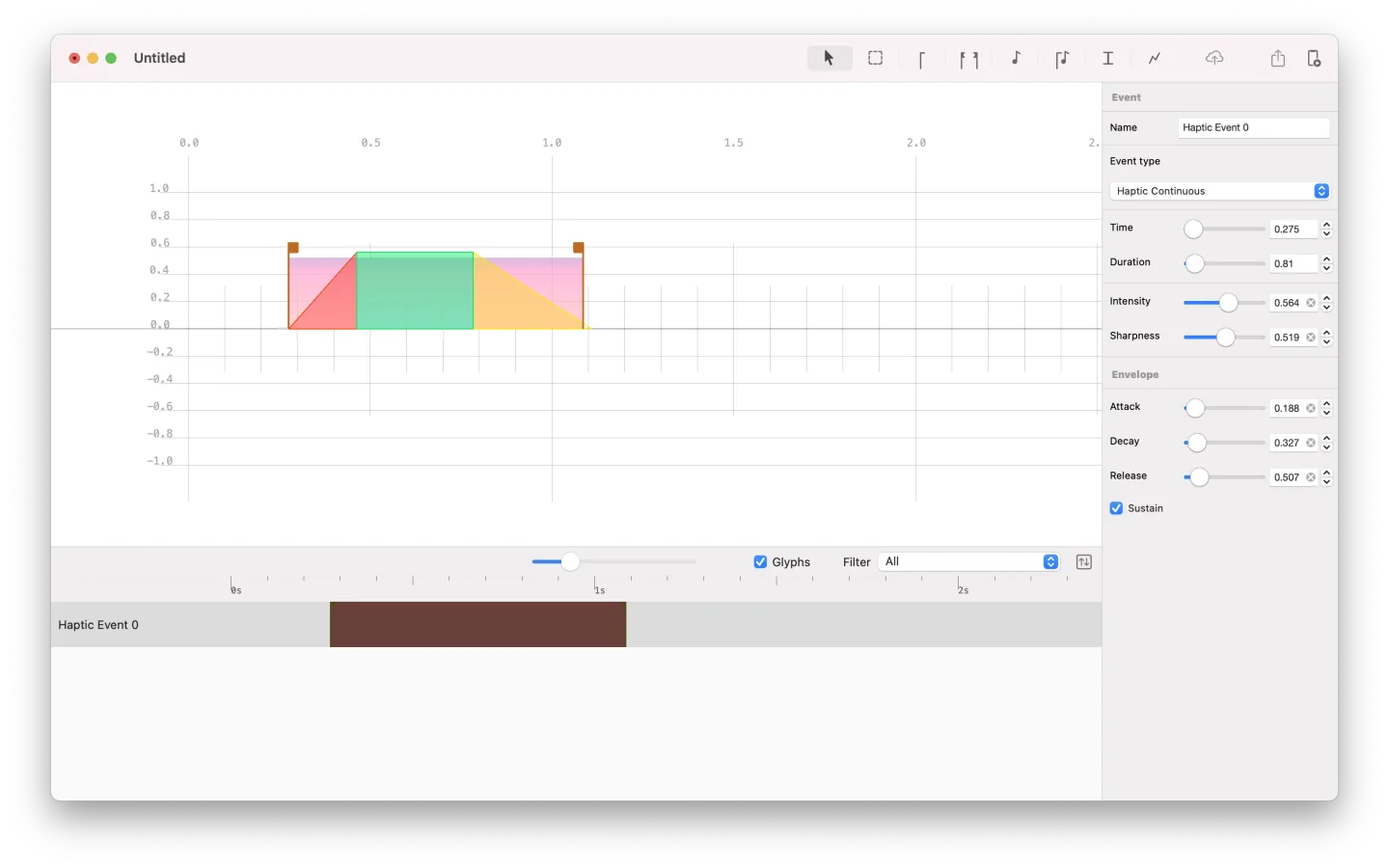
[Haptrix](https://www.haptrix.com/store) · © nthState / NTHSTATE LTD. Official Haptrix screenshot; all rights reserved. Excluded from MIT and CC BY 4.0.
1. Attack, sustain and release shape the signal
- Use the motif consistently and allow its strength to be reduced.
- [Haptrix](https://www.haptrix.com/store)
## How it works
Tactile patterns support a scene or indicate a recognizable motif.
## Variants
### Variants and applications
- Character knock. Role: Feedback. Features: Basic impulses. Input: status. Rule: A certain rhythm of knocking accompanies the appearance of a character and is later recognized without an image. Application: Story in messages, a door, an invisible companion. Limitations: Rhythm is an author's motive, not a universal emotional code.
- Character through rhythm. Role: Feedback. Features: Rich tactility. Input: status. Rule: Cautious, sharp or uneven impulses correspond to the behavior of a fictional interlocutor. Application: Dialogue, interactive prose, pet. Limitations: Emotional interpretations require testing with the audience and are not the same for everyone.
- Virtual touch. Role: Feedback. Features: Rich tactility. Input: touch, network. Rule: Touching an object or a coordinated gesture from a partner causes a short, soft response. Application: Caring for a pet, shared history, social presence. Limitations: Do not promise sensation of a certain part of the body or real transfer of force.
- Rain and drops. Role: Feedback. Features: Rich tactility. Input: status. Rule: Rare irregular pulses accompany drops, a denser pattern indicates a downpour. Application: Atmosphere, walk, weather scene. Limitations: Select noticeable moments; Long background is tiring and wastes battery.
- Thunder and a major event. Role: Feedback. Features: Rich tactility. Input: status. Rule: The rise and fall coincide with thunder, a landslide, or the passing of a heavy object. Application: Cut-scene, disaster, cinematic moment. Limitations: Synchronize with when the event reaches the character, if it is important for the scene.
- The inner rhythm of a creature. Role: Feedback. Features: Rich tactility. Input: status. Rule: Breathing, pulsation or beating of a wing forms a recognizable tactile image of a living object. Application: Hand-held creature, incubator, science fiction biology. Limitations: This is a staged model; don't make it a medical indicator...
- Recognizable ability. Role: Feedback. Features: Rich tactility. Input: status. Rule: A spell or device has its own short start and end sequence. Uses: Magic, gadgets, collectibles. Limitations: Vocabulary must be kept small and distinct.
- Return of the motive. Role: Mechanics. Features: Basic impulses. Input: touch. Rule: A previously learned rhythm appears in a new scene; the player recognizes a character, object or connection of events. Application: Detective, flashback, plot mystery. Limitations: If recognition is necessary for progress, give an alternative available clue.
- Intentional lack of response. Role: Mechanics. Features: Basic impulses. Input: touch. Rule: A familiar action suddenly does not produce the expected vibration; the player checks what has changed in the world. Application: Faulty device, missing satellite, plot twist. Limitations: The absence of a signal is ambiguous; confirm it with another channel and take into account the system shutdown.
- The final tactile phrase. Role: Feedback. Features: Rich tactility. Input: status. Rule: A short composition ends a scene or repeats mastered signals in a new order. Application: Level finale, arc completion, reward. Limitations: Do not present the length or strength of the effect as a mandatory indicator of the value of the reward.
## Context and limits
Author's systematization: 160 cards in 16 groups. These are mechanics, feedback techniques, applications and experimental extensions, not 160 independent physical effects. Design examples are hypothetical, not statements about the released games that used them.
## Connected materials
## Sources and provenance
Original editorial design catalog consolidated from project discussions on 2026-10-20. Complete discussion item lists and contextual limitations are preserved; linked primary sources support specific techniques, not the entire classification. English translation was prepared with machine assistance and editorial review.
- [Haptrix](https://www.haptrix.com/store) (id: source-228f7312eafb9b26)
CC-BY-4.0 · gamemechanics.pro contributors