---
key: mechanic/melee-combat--t020
type: mechanic
id: melee-combat--t020
lang: en
title: 'Breakable parts, injuries and conditions'
summary: >-
The player selects a target part or effect type to change its capabilities
rather than merely reduce shared health.
updatedAt: '2026-10-22'
status: active
url: 'https://gamemechanics.pro/en/knowledge/mechanic/melee-combat--t020/'
jsonUrl: 'https://gamemechanics.pro/api/v1/knowledge/en/mechanic/melee-combat--t020.json'
markdownUrl: 'https://gamemechanics.pro/content/knowledge/en/mechanic/melee-combat--t020.md'
aliases:
- Destructible parts and wounds
tags:
- Melee and combat systems
- Mechanics and variants
sourceIds:
- source-3817d420df0baa92
- source-e7703f0b61e1f579
- source-347f53116d536fb1
sources:
- id: source-3817d420df0baa92
title: 'Robert Nystrom: State'
url: >-
https://github.com/munificent/game-programming-patterns/blob/master/book/state.markdown
verifiedAt: null
- id: source-e7703f0b61e1f579
title: 'Godot: AnimationTree'
url: >-
https://docs.godotengine.org/en/stable/tutorials/animation/animation_tree.html
verifiedAt: null
- id: source-347f53116d536fb1
title: Bulletstorm
url: 'https://gamemechanics.org/patterns/cutting-in-half'
verifiedAt: null
relations:
- type: uses
direction: outgoing
label: Sources in the selection
key: resource/state-pattern
title: 'State: Game Programming Patterns'
url: 'https://gamemechanics.pro/en/resources/#resource-state-pattern'
jsonUrl: 'https://gamemechanics.pro/api/v1/knowledge/en/resource/state-pattern.json'
markdownUrl: 'https://gamemechanics.pro/content/knowledge/en/resource/state-pattern.md'
placements:
- catalogId: melee-combat
id: t020
title: Melee and combat systems
url: 'https://gamemechanics.pro/en/mechanics/melee-combat/#t020'
categoryIds:
- mechanics
supersededBy: []
attributes:
preview:
updatedAt: '2026-10-22'
title: Destructible parts and wounds
description: >-
The player selects a target part or effect type to change its capabilities
rather than merely reduce shared health.
image:
src: images/mechanics/impact-cutting-in-half.webp
width: 498
height: 276
game: Bulletstorm
sourceUrl: 'https://gamemechanics.org/patterns/cutting-in-half'
originalUrl: 'https://cdn.gamemechanics.org/webm/bulletstorm_boneduster.webm'
sourceFrameSeconds: 0.41
credit: People Can Fly / Epic Games; frame from clip via GameMechanics.org
rights: >-
Game imagery © its respective rights holders. Source host:
GameMechanics.org. Visible source watermarks preserved. All rights
reserved; excluded from MIT and CC BY 4.0.
caption: An enemy model separates in Bulletstorm
alt: An enemy model separates in Bulletstorm
markers:
- x: 50
'y': 25
label: Detached model part
- x: 51
'y': 62
label: Remaining model part
tips:
- Connect model changes to clear changes in the target’s capabilities.
examples:
- title: Bulletstorm
url: 'https://gamemechanics.org/patterns/cutting-in-half'
endsAt: null
provenance: >-
Original bilingual editorial overviews authored for gamemechanics.pro on
2026-10-20 and reviewed on 2026-10-21. Scenarios are hypothetical design
examples; prototype checks describe work to perform, not completed playtests.
Primary sources support the stated techniques and implementation context, not
every proposed variant.
license: CC-BY-4.0
codeLicense: MIT
attribution: gamemechanics.pro contributors
catalogKey: catalog/melee-combat
---
# Breakable parts, injuries and conditions
id: melee-combat--t020
type: mechanic
key: mechanic/melee-combat--t020
lang: en
status: active
url: https://gamemechanics.pro/en/knowledge/mechanic/melee-combat--t020/
The player selects a target part or effect type to change its capabilities rather than merely reduce shared health.
## At a glance
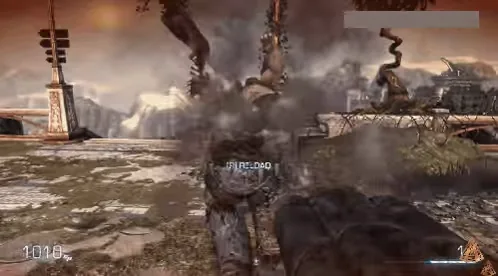
[Bulletstorm](https://gamemechanics.org/patterns/cutting-in-half) · Game imagery © its respective rights holders. Source host: GameMechanics.org. Visible source watermarks preserved. All rights reserved; excluded from MIT and CC BY 4.0.
[Source recording](https://cdn.gamemechanics.org/webm/bulletstorm_boneduster.webm), 0.41 s
1. Detached model part
2. Remaining model part
- Connect model changes to clear changes in the target’s capabilities.
- [Bulletstorm](https://gamemechanics.org/patterns/cutting-in-half)
## How it works
The player selects a target part or effect type to change its capabilities rather than merely reduce shared health.
## Variants
### Mechanic variants
- Local durability: a separate part has its own break condition.
- Functional loss: damaging a weapon, limb or sensor changes the target's behavior.
- State accumulation: repeated effects cross a stagger, injury or vulnerability threshold.
- Part recovery: the target repairs or reconfigures unless the player maintains pressure.
## Design example
A mechanical guard can lose leg function and slow down, or lose its ranged weapon while retaining fast melee attacks.
Prototype check: After each break, check available actions and visible changes; attacking an already broken part should follow an explicit rule.
## Context and limits
Melee combat revolves around distance and the moment of commitment. Starting an action can temporarily remove the ability to defend, so opponents need readable preparation, reach and contact results. These overviews separate decisions about targets, continuing a sequence, choosing a defense and escaping a bad position. Start by testing one attack and one response without decorative effects. The dedicated boss reference remains available in the direction map; this catalog covers the other contact-combat topics. Sources illustrate state and animation-transition models rather than prescribing a universal combat formula.
## Connected materials
- Sources in the selection: [State: Game Programming Patterns](https://gamemechanics.pro/en/resources/#resource-state-pattern) (key: resource/state-pattern)
## Sources and provenance
Original bilingual editorial overviews authored for gamemechanics.pro on 2026-10-20 and reviewed on 2026-10-21. Scenarios are hypothetical design examples; prototype checks describe work to perform, not completed playtests. Primary sources support the stated techniques and implementation context, not every proposed variant.
- [Robert Nystrom: State](https://github.com/munificent/game-programming-patterns/blob/master/book/state.markdown) (id: source-3817d420df0baa92)
- [Godot: AnimationTree](https://docs.godotengine.org/en/stable/tutorials/animation/animation_tree.html) (id: source-e7703f0b61e1f579)
- [Bulletstorm](https://gamemechanics.org/patterns/cutting-in-half) (id: source-347f53116d536fb1)
CC-BY-4.0 · gamemechanics.pro contributors