---
key: mechanic/engagement-retention--family-14
type: mechanic
id: engagement-retention--family-14
lang: en
title: Habit and calendar-based return
summary: >-
Daily tasks, streaks and reminders connect returning with the calendar.
Players may experience this as support or obligation.
updatedAt: '2026-10-22'
status: active
url: >-
https://gamemechanics.pro/en/knowledge/mechanic/engagement-retention--family-14/
jsonUrl: >-
https://gamemechanics.pro/api/v1/knowledge/en/mechanic/engagement-retention--family-14.json
markdownUrl: >-
https://gamemechanics.pro/content/knowledge/en/mechanic/engagement-retention--family-14.md
aliases:
- Habits and calendar-based return
tags:
- 'Engagement, retention and addictive patterns'
- Mechanics catalog
sourceIds:
- source-5ff8e42e90d8723b
- source-872a30e434db6d16
sources:
- id: source-5ff8e42e90d8723b
title: 'Frommel and Mandryk, Daily Quests or Daily Pests?'
url: 'https://doi.org/10.1145/3549489'
verifiedAt: null
- id: source-872a30e434db6d16
title: Duolingo
url: >-
https://blog.duolingo.com/duolingo-101-how-to-learn-a-language-on-duolingo/
verifiedAt: null
relations: []
placements:
- catalogId: engagement-retention
id: family-14
title: 'Engagement, retention and addictive patterns'
url: 'https://gamemechanics.pro/en/mechanics/engagement-retention/#family-14'
categoryIds:
- section-1
supersededBy: []
attributes:
preview:
updatedAt: '2026-10-22'
title: Habits and calendar-based return
description: >-
Daily tasks, streaks and reminders connect returning with the calendar.
Players may experience this as support or obligation.
image:
src: images/mechanics/learning-duo-101-7.webp
width: 665
height: 1440
game: Duolingo
sourceUrl: >-
https://blog.duolingo.com/duolingo-101-how-to-learn-a-language-on-duolingo/
originalUrl: >-
https://s3.us-east-1.amazonaws.com/content.duolingo.com/Duolingo+101%3A+How+to+learn+a+language+on+Duolingo/9-pathUnit.png
credit: Duolingo
rights: © Duolingo. All rights reserved. Excluded from MIT and CC BY 4.0.
caption: 'Duolingo: a learning path and a practice node'
alt: 'Duolingo: a learning path and a practice node'
markers:
- x: 33
'y': 35
label: The barbell node denotes practice
tips:
- Allow breaks without losing all accumulated progress.
examples:
- title: Duolingo
url: >-
https://blog.duolingo.com/duolingo-101-how-to-learn-a-language-on-duolingo/
endsAt: null
provenance: >-
Original editorial design catalog consolidated from project discussions on
2026-10-20. Complete discussion item lists and contextual limitations are
preserved; linked primary sources support specific techniques, not the entire
classification. English translation was prepared with machine assistance and
editorial review.
license: CC-BY-4.0
codeLicense: MIT
attribution: gamemechanics.pro contributors
catalogKey: catalog/engagement-retention
---
# Habit and calendar-based return
id: engagement-retention--family-14
type: mechanic
key: mechanic/engagement-retention--family-14
lang: en
status: active
url: https://gamemechanics.pro/en/knowledge/mechanic/engagement-retention--family-14/
Daily tasks, streaks and reminders connect returning with the calendar. Players may experience this as support or obligation.
## At a glance
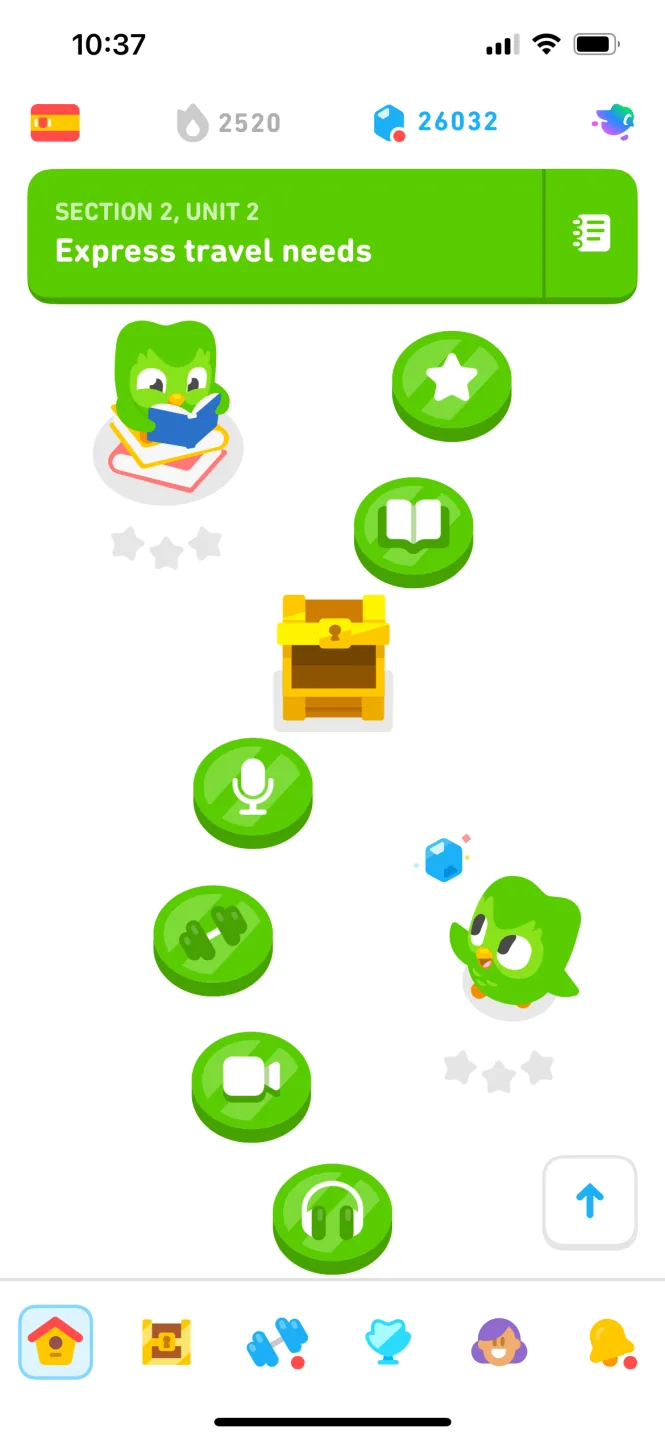
[Duolingo](https://blog.duolingo.com/duolingo-101-how-to-learn-a-language-on-duolingo/) · © Duolingo. All rights reserved. Excluded from MIT and CC BY 4.0.
1. The barbell node denotes practice
- Allow breaks without losing all accumulated progress.
- [Duolingo](https://blog.duolingo.com/duolingo-101-how-to-learn-a-language-on-duolingo/)
## How it works
Players may perceive such rewards both as useful motivation and as an obligation, a chore, or a source of fear of missing out. This difference is found in player experience research, not just design criticism. Frommel and Mandryk, Daily Quests or Daily Pests?.
## Variants
### Variants and applications
- Daily Login Reward: Logging in becomes a rewarding activity in its own right
- A series of consecutive days, streak: the value is gained by the continuity of visits
- Daily tasks: regularly update the short-term agenda
- Weekly Challenges: Form a longer repeating cycle
- Renewable Energy: When an available resource becomes available, it sets the return time
- Construction, crafting and expedition timers: completing the process becomes a reason to visit
- Rotation of modes and activities: different days offer different opportunities
- Sequential return program: after a break, rewards are issued for the next few visits
## Context and limits
A map of 160 techniques for analyzing interest, returns, costs and pressure on the player. Involvement in itself does not mean dependence; the presence of separate mechanics does not determine the diagnosis or prove causation. This is the author's classification for critical analysis of design, and not a scientifically established list of the causes of gaming disorder. Assess context, audience, voluntariness of participation, and opportunity to stop.
## Connected materials
## Sources and provenance
Original editorial design catalog consolidated from project discussions on 2026-10-20. Complete discussion item lists and contextual limitations are preserved; linked primary sources support specific techniques, not the entire classification. English translation was prepared with machine assistance and editorial review.
- [Frommel and Mandryk, Daily Quests or Daily Pests?](https://doi.org/10.1145/3549489) (id: source-5ff8e42e90d8723b)
- [Duolingo](https://blog.duolingo.com/duolingo-101-how-to-learn-a-language-on-duolingo/) (id: source-872a30e434db6d16)
CC-BY-4.0 · gamemechanics.pro contributors