---
key: mechanic/engagement-retention--family-13
type: mechanic
id: engagement-retention--family-13
lang: en
title: Social obligations and group pressure
summary: >-
Shared goals create group expectations. Missing play can feel obligatory when
it affects others or becomes public.
updatedAt: '2026-10-22'
status: active
url: >-
https://gamemechanics.pro/en/knowledge/mechanic/engagement-retention--family-13/
jsonUrl: >-
https://gamemechanics.pro/api/v1/knowledge/en/mechanic/engagement-retention--family-13.json
markdownUrl: >-
https://gamemechanics.pro/content/knowledge/en/mechanic/engagement-retention--family-13.md
aliases:
- Group obligations
tags:
- 'Engagement, retention and addictive patterns'
- Mechanics catalog
sourceIds:
- source-fc1e96448c00cb53
sources:
- id: source-fc1e96448c00cb53
title: Shop Titans
url: 'https://store.steampowered.com/app/1258080/'
verifiedAt: null
relations: []
placements:
- catalogId: engagement-retention
id: family-13
title: 'Engagement, retention and addictive patterns'
url: 'https://gamemechanics.pro/en/mechanics/engagement-retention/#family-13'
categoryIds:
- section-1
supersededBy: []
attributes:
preview:
updatedAt: '2026-10-22'
title: Group obligations
description: >-
Shared goals create group expectations. Missing play can feel obligatory
when it affects others or becomes public.
image:
src: images/mechanics/rpg-shop-titans-04.webp
width: 1440
height: 810
game: Shop Titans
sourceUrl: 'https://store.steampowered.com/app/1258080/'
originalUrl: >-
https://shared.akamai.steamstatic.com/store_item_assets/steam/apps/1258080/ss_39b519e8208d0600caf7b040e5da393715d599c1.1920x1080.jpg?t=1754432193
credit: 'Kabam Games, Inc.'
rights: >-
Game imagery © its respective rights holders. Official game guide or
publisher-distributed screenshot; all rights reserved. Excluded from MIT
and CC BY 4.0.
caption: A persistent guild and its shared capabilities
alt: A persistent guild and its shared capabilities
markers:
- x: 78
'y': 89
label: Guild Perks provides access to shared guild benefits
tips:
- Avoid penalizing the whole group for one participant’s absence.
examples:
- title: Shop Titans
url: 'https://store.steampowered.com/app/1258080/'
endsAt: null
provenance: >-
Original editorial design catalog consolidated from project discussions on
2026-10-20. Complete discussion item lists and contextual limitations are
preserved; linked primary sources support specific techniques, not the entire
classification. English translation was prepared with machine assistance and
editorial review.
license: CC-BY-4.0
codeLicense: MIT
attribution: gamemechanics.pro contributors
catalogKey: catalog/engagement-retention
---
# Social obligations and group pressure
id: engagement-retention--family-13
type: mechanic
key: mechanic/engagement-retention--family-13
lang: en
status: active
url: https://gamemechanics.pro/en/knowledge/mechanic/engagement-retention--family-13/
Shared goals create group expectations. Missing play can feel obligatory when it affects others or becomes public.
## At a glance
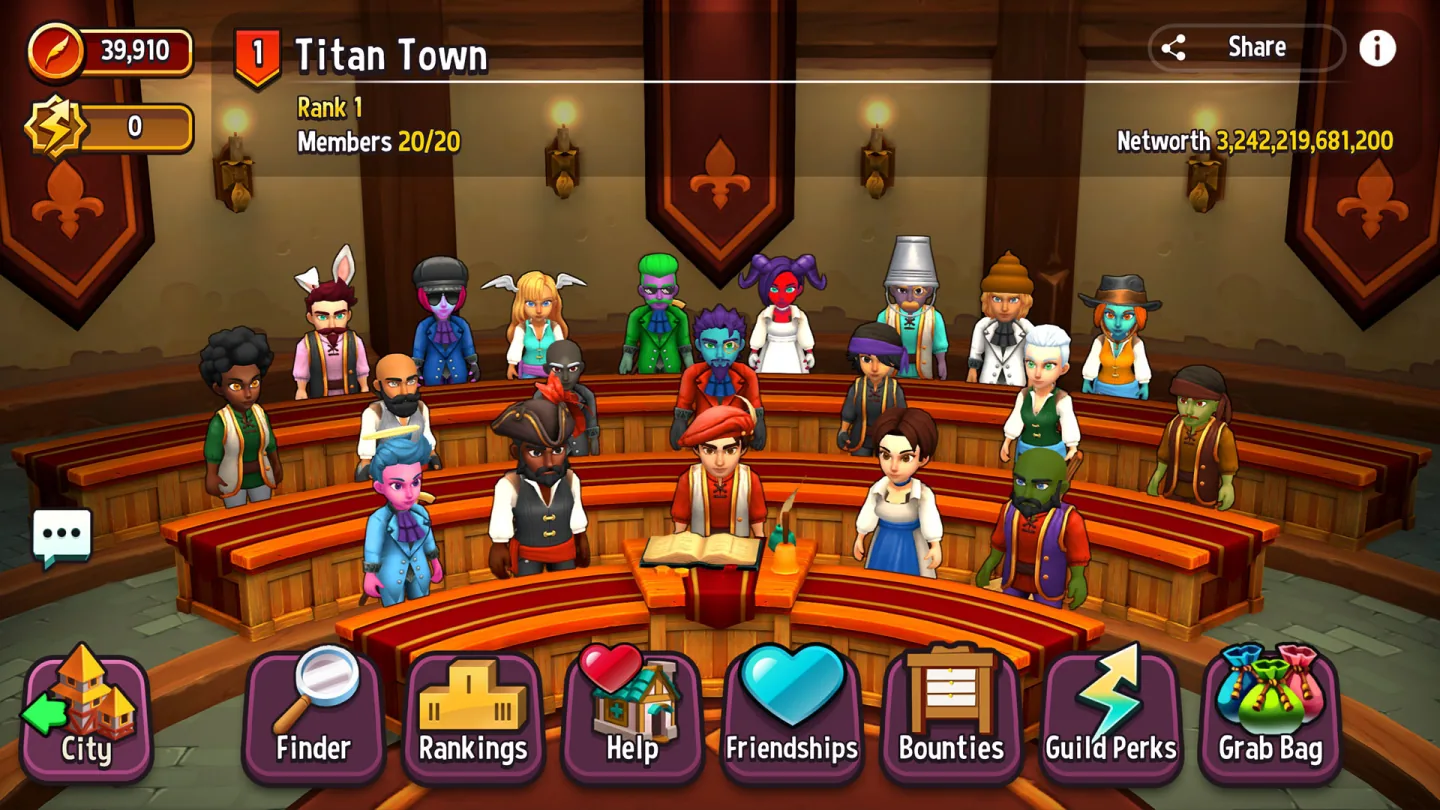
[Shop Titans](https://store.steampowered.com/app/1258080/) · Game imagery © its respective rights holders. Official game guide or publisher-distributed screenshot; all rights reserved. Excluded from MIT and CC BY 4.0.
1. Guild Perks provides access to shared guild benefits
- Avoid penalizing the whole group for one participant’s absence.
- [Shop Titans](https://store.steampowered.com/app/1258080/)
## How it works
Group obligations can turn participation into pressure when omission affects others or becomes public.
## Variants
### Variants and applications
- Scheduled raids: participation requires showing up at a specific time
- Activity quotas: maintaining a place in a group depends on regular contributions
- Dependence of the overall result on each participant: absence is perceived as damage to the team
- Scarce irreplaceable role: it is difficult for a person to leave because there is no one to replace him
- Duty of reciprocity: help received creates an expectation of reciprocal activity.
- Public visibility of absence: absences become visible to the group
- Reward requiring invited participants: progress depends on inviting other people
- Tied to one group or server: accumulated connections and shared assets make leaving difficult
## Context and limits
A map of 160 techniques for analyzing interest, returns, costs and pressure on the player. Involvement in itself does not mean dependence; the presence of separate mechanics does not determine the diagnosis or prove causation. This is the author's classification for critical analysis of design, and not a scientifically established list of the causes of gaming disorder. Assess context, audience, voluntariness of participation, and opportunity to stop.
## Connected materials
## Sources and provenance
Original editorial design catalog consolidated from project discussions on 2026-10-20. Complete discussion item lists and contextual limitations are preserved; linked primary sources support specific techniques, not the entire classification. English translation was prepared with machine assistance and editorial review.
- [Shop Titans](https://store.steampowered.com/app/1258080/) (id: source-fc1e96448c00cb53)
CC-BY-4.0 · gamemechanics.pro contributors