---
key: mechanic/education--dialogue-training
type: mechanic
id: education--dialogue-training
lang: en
title: Dialogue practice and debrief
summary: >-
The learner solves a task through conversation, listening, replying and
checking understanding, then reviewing the outcome.
updatedAt: '2026-10-22'
status: active
url: 'https://gamemechanics.pro/en/knowledge/mechanic/education--dialogue-training/'
jsonUrl: >-
https://gamemechanics.pro/api/v1/knowledge/en/mechanic/education--dialogue-training.json
markdownUrl: >-
https://gamemechanics.pro/content/knowledge/en/mechanic/education--dialogue-training.md
aliases:
- Dialogue practice
tags:
- Educational games
- Applied learning and evidence work
sourceIds:
- source-3992177cb9c36d87
sources:
- id: source-3992177cb9c36d87
title: Duolingo
url: 'https://blog.duolingo.com/product-highlights/'
verifiedAt: null
relations: []
placements:
- catalogId: education
id: dialogue-training
title: Educational games
url: 'https://gamemechanics.pro/en/mechanics/education/#dialogue-training'
categoryIds:
- applied-learning
supersededBy: []
attributes:
preview:
updatedAt: '2026-10-22'
title: Dialogue practice
description: >-
The learner solves a task through conversation, listening, replying and
checking understanding, then reviewing the outcome.
image:
src: images/mechanics/duolingo-video-call.webp
width: 1400
height: 800
crop:
x: 150
'y': 50
width: 1100
height: 700
game: Duolingo
sourceUrl: 'https://blog.duolingo.com/product-highlights/'
originalUrl: >-
https://storage.ghost.io/c/7a/33/7a33d0f4-927d-4fe8-a6bf-96131b5e76d4/content/images/2025/12/EN-DuolingoProductYIR-Video-Call-1.png
credit: 'Duolingo, Inc.; official screenshot comparison of Video Call with Lily'
rights: >-
Screenshots © their respective rights holders. Provided in the official
guide or product article; all rights reserved. Excluded from MIT and CC
BY 4.0.
caption: Starting a call and ending it
alt: Starting a call and ending it
markers:
- x: 23
'y': 58
label: The button starts a conversation with Lily
- x: 50
'y': 84
label: A separate button ends the call
tips:
- Review meaning and appropriateness alongside language form.
examples:
- title: Duolingo
url: 'https://blog.duolingo.com/product-highlights/'
endsAt: null
provenance: >-
Educational reference expanded from all 64 families and 749 variants of the
original children-education taxonomy, with original editorial additions dated
2026-10-20. Sources support specific methods and examples, not the entire
classification or its effectiveness.
license: CC-BY-4.0
codeLicense: MIT
attribution: gamemechanics.pro contributors
catalogKey: catalog/education
---
# Dialogue practice and debrief
id: education--dialogue-training
type: mechanic
key: mechanic/education--dialogue-training
lang: en
status: active
url: https://gamemechanics.pro/en/knowledge/mechanic/education--dialogue-training/
The learner solves a task through conversation, listening, replying and checking understanding, then reviewing the outcome.
## At a glance
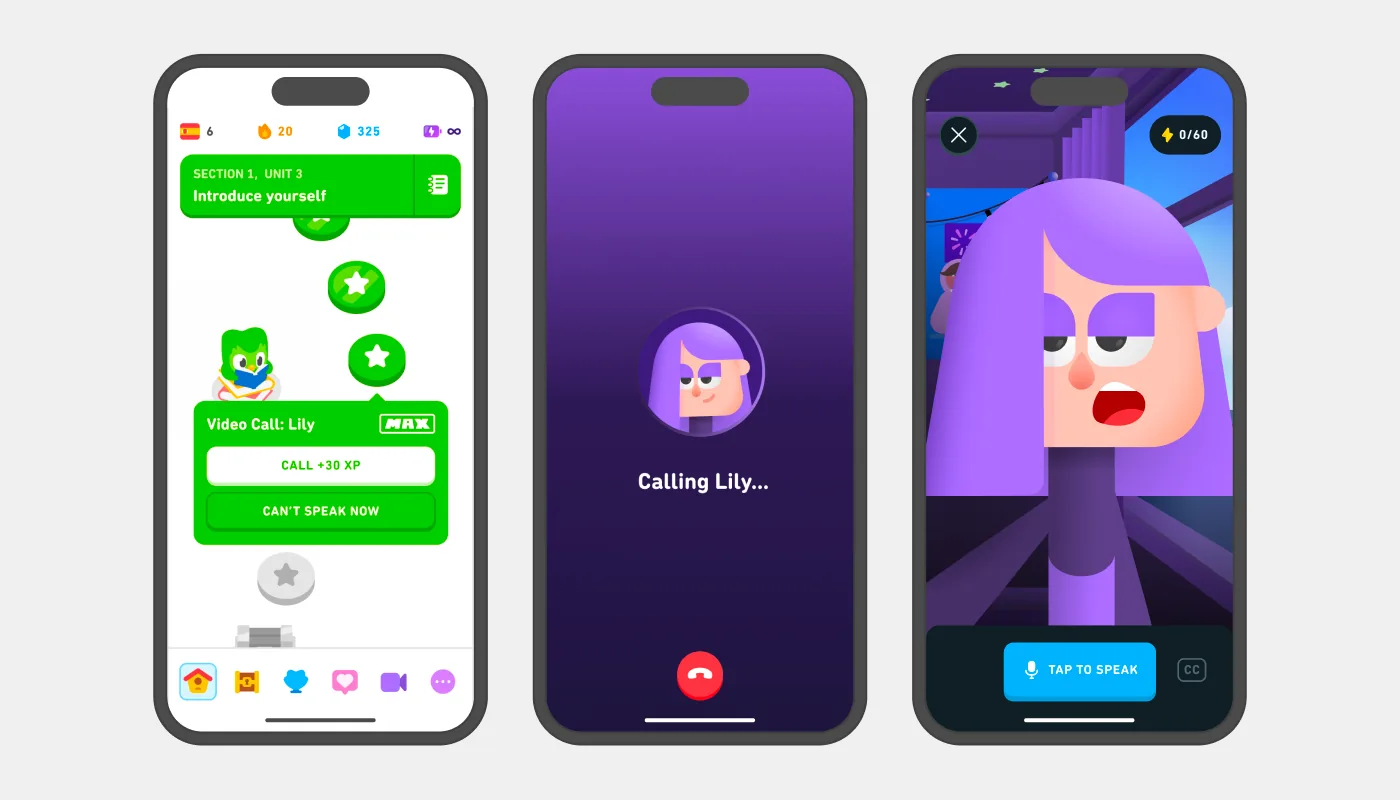
[Duolingo](https://blog.duolingo.com/product-highlights/) · Screenshots © their respective rights holders. Provided in the official guide or product article; all rights reserved. Excluded from MIT and CC BY 4.0.
1. The button starts a conversation with Lily
2. A separate button ends the call
- Review meaning and appropriateness alongside language form.
- [Duolingo](https://blog.duolingo.com/product-highlights/)
## How it works
Players conduct a conversation toward a specific task, check understanding and review the effects of their responses.
## Variants
### Variants
- Clarify another speaker’s goal with an open question
- Paraphrase what was heard to check understanding
- Choose a follow-up question from the previous answer
- Ask for a missing fact before giving advice
- Explain one rule to different audiences
- Notice a contradiction between two statements
- Return to a branch and compare another response
- Debrief a conversation against its goal and observable actions
## Design example
Hypothetical support desk: establish a user’s problem, clarify constraints and agree on a next step.
## Context and limits
A mechanic map for games with explicit learning goals, from first encounters with a topic to professional practice. It covers children, teenagers and adults; choose subject, difficulty, context and controls for the learner. Player actions, subject content, instructional support and assessment are distinct layers. Scores and game completion alone do not establish mastery or skill transfer.
## Connected materials
## Sources and provenance
Educational reference expanded from all 64 families and 749 variants of the original children-education taxonomy, with original editorial additions dated 2026-10-20. Sources support specific methods and examples, not the entire classification or its effectiveness.
- [Duolingo](https://blog.duolingo.com/product-highlights/) (id: source-3992177cb9c36d87)
CC-BY-4.0 · gamemechanics.pro contributors