---
key: mechanic/dialogue--family-access
type: mechanic
id: dialogue--family-access
lang: en
title: Starting and ending a conversation
summary: >-
Entry conditions, initiator and controls determine when a conversation starts
and how it can end.
updatedAt: '2026-10-22'
status: active
url: 'https://gamemechanics.pro/en/knowledge/mechanic/dialogue--family-access/'
jsonUrl: >-
https://gamemechanics.pro/api/v1/knowledge/en/mechanic/dialogue--family-access.json
markdownUrl: >-
https://gamemechanics.pro/content/knowledge/en/mechanic/dialogue--family-access.md
aliases: []
tags:
- Dialogue
- Structure and input
sourceIds:
- source-3992177cb9c36d87
sources:
- id: source-3992177cb9c36d87
title: Duolingo
url: 'https://blog.duolingo.com/product-highlights/'
verifiedAt: null
relations: []
placements:
- catalogId: dialogue
id: family-access
title: Dialogue
url: 'https://gamemechanics.pro/en/mechanics/dialogue/#family-access'
categoryIds:
- section-1
supersededBy: []
attributes:
preview:
updatedAt: '2026-10-22'
title: Starting and ending a conversation
description: >-
Entry conditions, initiator and controls determine when a conversation
starts and how it can end.
image:
src: images/mechanics/duolingo-video-call.webp
width: 1400
height: 800
crop:
x: 150
'y': 50
width: 1100
height: 700
game: Duolingo
sourceUrl: 'https://blog.duolingo.com/product-highlights/'
originalUrl: >-
https://storage.ghost.io/c/7a/33/7a33d0f4-927d-4fe8-a6bf-96131b5e76d4/content/images/2025/12/EN-DuolingoProductYIR-Video-Call-1.png
credit: 'Duolingo, Inc.; official screenshot comparison of Video Call with Lily'
rights: >-
Screenshots © their respective rights holders. Provided in the official
guide or product article; all rights reserved. Excluded from MIT and CC
BY 4.0.
caption: Starting a call and ending it
alt: Starting a call and ending it
markers:
- x: 23
'y': 58
label: The button starts a conversation with Lily
- x: 50
'y': 84
label: A separate button ends the call
tips:
- Make the start and exit controls clear before the first response.
examples:
- title: Duolingo
url: 'https://blog.duolingo.com/product-highlights/'
endsAt: null
provenance: >-
Original editorial design catalog consolidated from project discussions on
2026-10-20. Complete discussion item lists and contextual limitations are
preserved; linked primary sources support specific techniques, not the entire
classification. English translation was prepared with machine assistance and
editorial review.
license: CC-BY-4.0
codeLicense: MIT
attribution: gamemechanics.pro contributors
catalogKey: catalog/dialogue
---
# Starting and ending a conversation
id: dialogue--family-access
type: mechanic
key: mechanic/dialogue--family-access
lang: en
status: active
url: https://gamemechanics.pro/en/knowledge/mechanic/dialogue--family-access/
Entry conditions, initiator and controls determine when a conversation starts and how it can end.
## At a glance
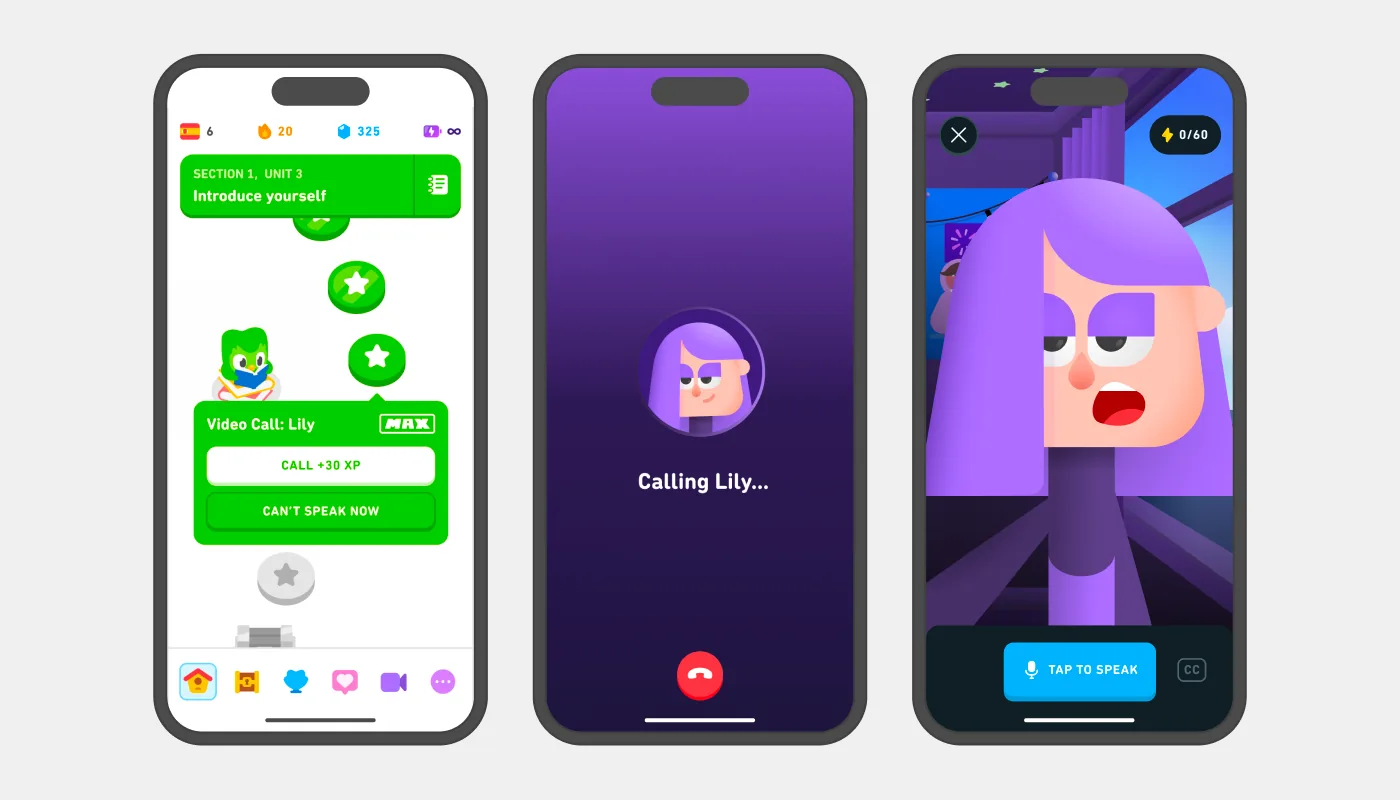
[Duolingo](https://blog.duolingo.com/product-highlights/) · Screenshots © their respective rights holders. Provided in the official guide or product article; all rights reserved. Excluded from MIT and CC BY 4.0.
1. The button starts a conversation with Lily
2. A separate button ends the call
- Make the start and exit controls clear before the first response.
- [Duolingo](https://blog.duolingo.com/product-highlights/)
## How it works
The terms, initiator, and entry method determine when communication begins and how it can be ended.
## Variants
### Variants and applications
- Player initiative. Rule: The player addresses the selected character, who can accept or reject the request.
- NPC initiative. Rule: The character himself starts a conversation when the conditions are met or his own need appears.
- Event conversation. Rule: An encounter, discovery, alarm, or story event automatically triggers an exchange of remarks.
- Access through an intermediary. Rule: To speak with a character, you must obtain an introduction, invitation, or audience.
- Entering into someone else's conversation. Rule: The player joins an already ongoing discussion and changes the composition of the participants.
- Postponed meeting. Rule: The parties agree to talk later, at an appointed time or under other circumstances.
- Voluntary exit. Rule: Player or NPC ends conversation; care can receive a separate social assessment.
- Suspension and resumption. Rule: The conversation maintains unfinished context and continues after the break.
## Context and limits
Author's working taxonomy compiled for this request. Titles are descriptive; sources confirm individual principles and examples, and not the entire list.
## Connected materials
## Sources and provenance
Original editorial design catalog consolidated from project discussions on 2026-10-20. Complete discussion item lists and contextual limitations are preserved; linked primary sources support specific techniques, not the entire classification. English translation was prepared with machine assistance and editorial review.
- [Duolingo](https://blog.duolingo.com/product-highlights/) (id: source-3992177cb9c36d87)
CC-BY-4.0 · gamemechanics.pro contributors